


Knock Knees (Genu Valgum)
Knock knees is a condition in which the knees angle inward and touch each other when a person stands straight, while the ankles remain apart. This condition is medically known as genu valgum. It is commonly seen in children and is often a normal part of growth and development. In most cases, the alignment corrects itself naturally as the child grows.
However, in some individuals, knock knees may persist into adolescence or adulthood. When severe, it can lead to pain, difficulty in walking, early joint wear, and functional limitations, requiring medical evaluation and treatment.
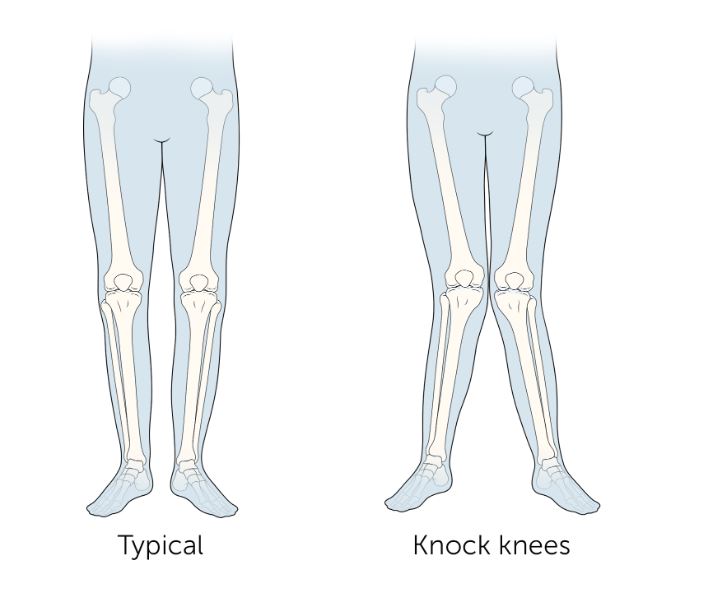
Knock Knees and Child Development
The development of leg alignment in children follows a predictable pattern. Infants commonly have bowlegs until about 2 years of age. Between 2 and 3 years, the legs often shift into a knock-knee alignment. By around 7 years of age, the legs usually straighten into a normal adult alignment.
In most children, knock knees are a temporary and normal phase of growth. Persistent or worsening deformity beyond this age may require further evaluation.
Symptoms and Causes
Symptoms of Knock Knees
- Visible inward angulation of the knees when standing
- Knees touching or nearly touching with feet apart
- Knee pain or discomfort, especially after activity
- Difficulty walking or running in severe cases
- Uneven shoe wear or associated foot pain
Causes of Knock Knees
- Normal growth and development in early childhood
- Abnormal bone development or metabolic disorders
- Obesity, which increases stress on the knee joints
- Ligament laxity or muscle imbalance around the knee
- Previous injury affecting bone alignment
Diagnosis of Knock Knees
Diagnosis begins with a detailed clinical examination, including assessment of leg alignment and gait. A thorough medical and family history is also important. In cases where treatment planning is required, a standing alignment X-ray or EOS scan is performed.
This imaging captures the entire limb from hip to ankle and helps determine the mechanical axis and exact location of the deformity, allowing the orthopedic surgeon to plan appropriate treatment.
Treatment Options for Knock Knees
Treatment in Children
- Observation, as many cases resolve naturally with growth
- Physiotherapy to improve strength and alignment
- Bracing or orthotics when required
- Weight management through a healthy lifestyle
- Surgery, rarely needed and reserved for severe deformities
Treatment in Adults
- Physiotherapy focused on muscle balance and joint support
- Use of braces or orthotic support for comfort
- Weight management to reduce joint stress
- Pain management through medication and activity modification
- Surgical correction in severe cases with pain or functional limitation
For expert evaluation and treatment of knock knees, consult Dr. Ashwani Maichand.
Our Services

Dr. Ashwani Maichand
MBBS, MS(Orthopaedics) | Mch(Orthopaedics)
- Sr. Consultant & Director at Minomax Orthopaedics
- Director Orthopaedics, CK Birla Hospital
- Fellowship Joint Replacement (USA & GERMANY)
- Visiting Surgeon HELIOSENDO at klinik, Hamburg, Germany
Dr. Ashwani Maichand brings with him a rich experience of Orthopaedics, more than a decade of which has been dedicated to joint reconstruction.
