


Dr. Ashwani Maichand offers a full range of hip replacement surgeries, using advanced minimally invasive and robotic techniques designed to reduce pain, speed up recovery, and preserve the muscles and tissues around the hip so the replaced joint behaves like a natural one. The most suitable approach is chosen for each patient’s anatomy and condition. Below are the types of hip replacement he performs:
Robotic Hip Replacement
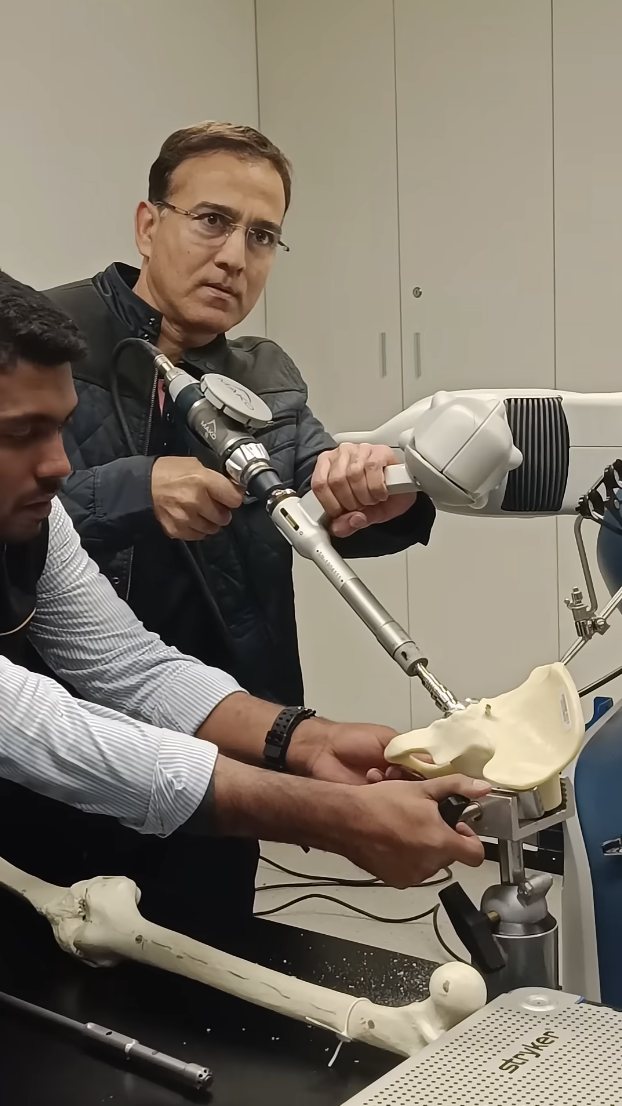
Robotic hip replacement is an advanced surgical method that uses robotic technology to enhance the accuracy of hip replacement surgery. Using modern imaging and computer-aided technology in real time, the surgeon generates a highly detailed 3D model of the patient’s hip, enabling a treatment plan customised to their individual anatomy and requirements.
The more precise placement of the hip implants reduces complications such as dislocation or uneven leg length, while smaller incisions lower postoperative pain and infection risk. Exact implant alignment supports greater implant longevity—especially valuable for younger patients—and patients typically recover faster than with traditional surgery.
Read more about Robotic Hip Replacement →
MIS Hip Replacement
MIS (Minimally Invasive Surgery) hip replacement works through small incisions of less than 8 cm, going between the muscles rather than cutting them, so the muscles, capsule, ligaments, and fascia around the hip are preserved along with the natural bone anatomy. Because these supporting structures stay intact, the replaced hip behaves like a normal hip—allowing patients to sit on the floor, sit cross-legged, and use Indian toilets without compromising implant longevity.
The technique uses shorter mini stems that preserve more of the femur and non-cemented, ceramic-on-poly implants designed to wear slowly over time. With the surrounding tissues preserved, recovery is significantly faster than open surgery, and most patients walk with full weight-bearing from the first day after surgery.
Read more about MIS Hip Replacement →
DAA Hip Replacement
The Direct Anterior Approach (DAA) replaces a damaged hip joint by accessing it from the front of the body, working between the muscles rather than cutting through them. At Minomax Orthopaedics it is combined with Minimally Invasive Surgery (MIS) techniques, preserving surrounding tissue, reducing surgical trauma, and enabling patients to comfortably resume activities such as cross-legged sitting, squatting, skiing, and yoga after recovery.
Benefits include faster mobility—patients can often walk within two to four hours of surgery—a shorter hospital stay, less muscle damage and bleeding, a more stable joint with lower dislocation risk, and precise implant positioning with equal leg length. Because the patient lies on their back, both hips can be replaced in a single session when needed, and complete recovery is typically achieved within two weeks.
Read more about DAA Hip Replacement →
Bikini Incision Hip Replacement
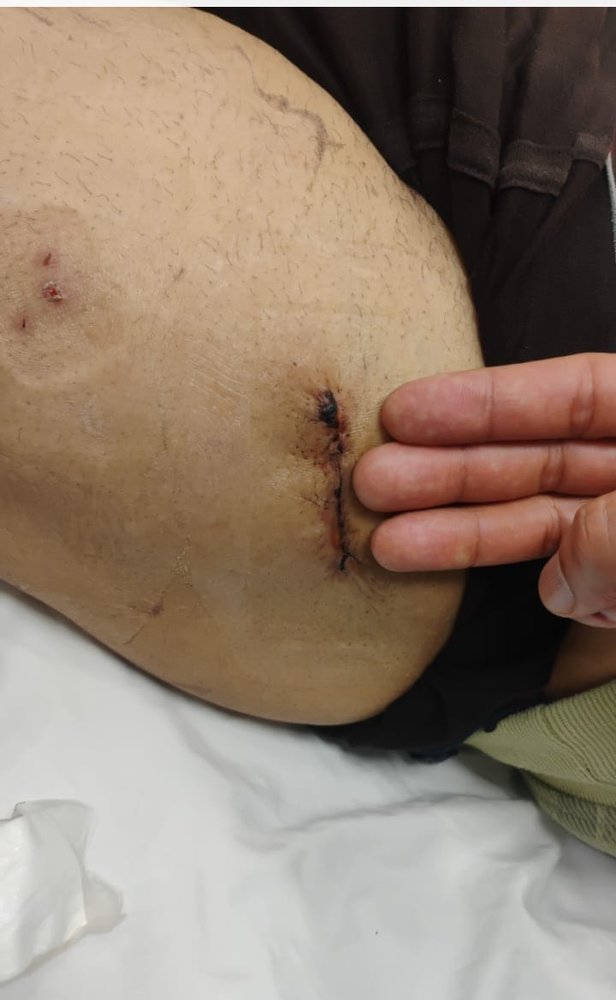
Bikini incision hip replacement replaces a damaged hip joint through a small diagonal incision—about 7 cm long, placed at a 45° angle—in front of the hip and aligned with the natural bikini line, so the scar can be discreetly concealed. Working between the muscle planes, the technique preserves the muscles, capsule, and ligaments around the hip, reducing surgical trauma and the risk of post-operative dislocation.
The procedure uses non-cemented ceramic-on-poly implants designed to integrate with the bone naturally and wear slowly over time. Suitable for both men and women, it also works for patients with a higher body weight and allows bilateral hip replacement in a single session. Patients often experience a shorter hospital stay, less pain, and a faster recovery, with many resuming basic activities within days.
Read more about Bikini Incision Hip Replacement →
SuperPATH Hip Replacement
SuperPATH (Supercapsular Percutaneously-Assisted Total Hip) is a minimally invasive technique performed through a 2–3 inch incision in line with the femur, without dislocating the hip or damaging the surrounding muscles and tendons. The muscles are gently retracted rather than cut, both the anterior and posterior capsules are preserved, and the joint is replaced from within the capsule—reducing pain and speeding recovery.
Benefits include less postoperative pain, minimal blood loss and scarring, a reduced risk of dislocation, and fewer post-surgery restrictions—many patients begin walking the same day. It suits patients with hip arthritis, AVN, fractures, and higher body weight, but is not recommended for revision surgery or those with significant anatomical challenges.